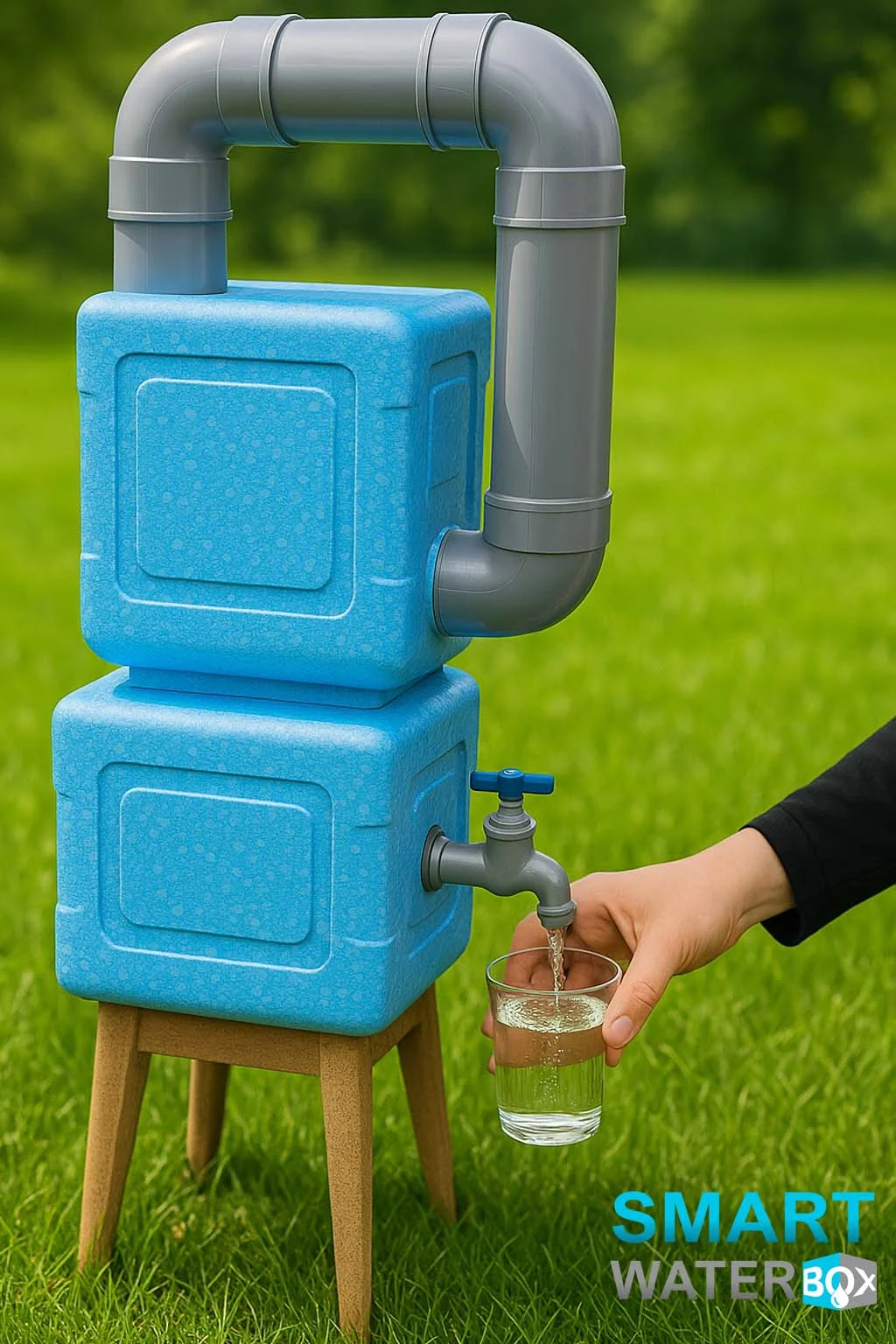
The Smart Water Box is a step-by-step DIY blueprint that teaches you how to build an Atmospheric Water Generation (AWG) system using readily available parts for typically under $110. The system extracts moisture from the air, purifies it through multi-stage filtration, and delivers clean, mineral-enriched drinking water — completely independent of plumbing, municipal water, or groundwater.
Whether you live off-grid, face unreliable local utilities, want emergency water backup, or simply want to stop buying bottled water, the Smart Water Box provides a self-sufficient, eco-friendly path to real water independence. Build it in a few hours. Drink clean water for years.
Uses proven AWG technology to condense humidity into clean drinking water — works anywhere there’s air.
Common hardware store parts, basic tools, beginner-friendly instructions. No specialist knowledge required.
No plumbing. No pipes. No municipal connection. Runs on standard electricity or solar power. Perfect for remote locations.
Risk-free purchase. Try the complete blueprint for 60 days. If it’s not everything you expected, get a full refund.
The Smart Water Box is a complete DIY blueprint — not a pre-built physical device. It gives you the exact step-by-step instructions, schematics, parts list, and assembly guidance needed to build your own Atmospheric Water Generation system. The finished system draws moisture from the surrounding air, condenses it into liquid water, runs it through a multi-stage purification process, and stores it for daily drinking use. Total parts cost: typically under $110.
The technology at the heart of the Smart Water Box is Atmospheric Water Generation (AWG) — a real, well-documented scientific process used commercially in water-scarce regions around the world and studied extensively by organizations including the U.S. Department of Energy. What makes the Smart Water Box special is the simplification: rather than a $2,000–$15,000 commercial AWG machine, the blueprint shows you how to build a fully functional version for under $110 using parts from your local hardware store.
The result is genuine water independence. No monthly water bills. No plastic bottled water. No dependence on aging pipes or municipal treatment plants. Just clean, safe drinking water — pulled directly from the air around you.
Austin, Texas
“I initially purchased this for emergency preparedness, but we’ve found ourselves using it nearly every day. The design is smart and intuitive, and the customer support team is responsive and very helpful. The water tastes clean and fresh. Outstanding product — I’d recommend it to anyone looking for water independence.”
Miami, Florida
“Where I live, the municipal water is hard and unpleasant. I set up the Smart Water Box in just a weekend, and now I enjoy clean, great-tasting water straight from the air — no pipes, no deliveries, no hassle. The instructions were incredibly clear. The solar heater blueprint bonus was an amazing addition. Highly recommend.”
Scottsdale, Arizona
“I was skeptical at first, but the Smart Water Box truly delivers. The instructions are crystal clear, and most parts were easy to source locally. While it produces less water in cold, dry conditions, it’s more than enough for daily drinking needs in our climate. Support was quick and helpful whenever I had questions. Worth every penny.”
In short: the Smart Water Box draws humid air in, cools it below the dew point to condense water vapor into liquid, then runs that water through a multi-stage purification system — delivering clean, mineral-rich drinking water without any connection to external infrastructure.
The atmosphere around us contains vast amounts of water vapor. At any given moment, the U.S. U.S. Geological Survey estimates the Earth’s atmosphere holds approximately 3,100 cubic miles of water in vapor form — more than all the rivers on Earth combined. The Smart Water Box taps into this resource using Atmospheric Water Generation (AWG) technology.
The operating principle is the same as natural condensation — the same process that causes morning dew on grass, or water droplets to form on a cold glass of water. Air is drawn in and passed over surfaces cooled below the air’s dew point temperature. At the dew point, water vapor converts from gas to liquid and can be collected. The Smart Water Box blueprint shows you how to engineer this process in a compact, controllable, home-buildable form.
The system begins with a specially designed air intake that draws ambient air into the unit using an energy-efficient fan. The air is channeled over cooled surfaces — a heat exchanger array that operates using the same refrigeration principles found in air conditioners and dehumidifiers. As the air temperature drops below the dew point, moisture condenses onto the cooled surfaces and flows into a collection channel.
The rate of water production depends on temperature and relative humidity. In a typical home environment with 60–80% relative humidity, a properly built Smart Water Box system can produce meaningful daily quantities of water. The blueprint includes a sizing guide so you can optimize your specific build for your local climate conditions.
Raw condensed water is clean relative to surface water sources, but the Smart Water Box blueprint doesn’t stop there. The system includes a multi-stage purification sequence:
Purified water flows into a built-in food-grade storage reservoir. The reservoir includes a level sensor that monitors water quantity and triggers alerts when the tank is nearly full or needs maintenance attention. Water is dispensed through a standard tap or dispenser outlet, making it as convenient to access as a kitchen faucet.
The storage system is designed to maintain water quality over time through a sealed construction that prevents recontamination. The blueprint includes guidance on reservoir sizing, materials selection (food-grade only), and hygienic sealing that meets the standards referenced by the WHO Guidelines for Drinking Water Quality.
The Smart Water Box blueprint covers both grid-tied and off-grid power configurations:
Smart monitoring features in the blueprint include humidity level tracking (to forecast water production), filter change indicators, and reservoir level sensors — giving you complete visibility into your system’s operation with minimal manual monitoring required.
The Smart Water Box occupies a unique position in the water access landscape:
The Smart Water Box blueprint teaches you how to build a supplemental water system. Always test water quality using a home test kit before drinking, particularly if building in a high-pollution environment. Consult local regulations regarding rainwater and condensate collection. See our disclaimer for full details.
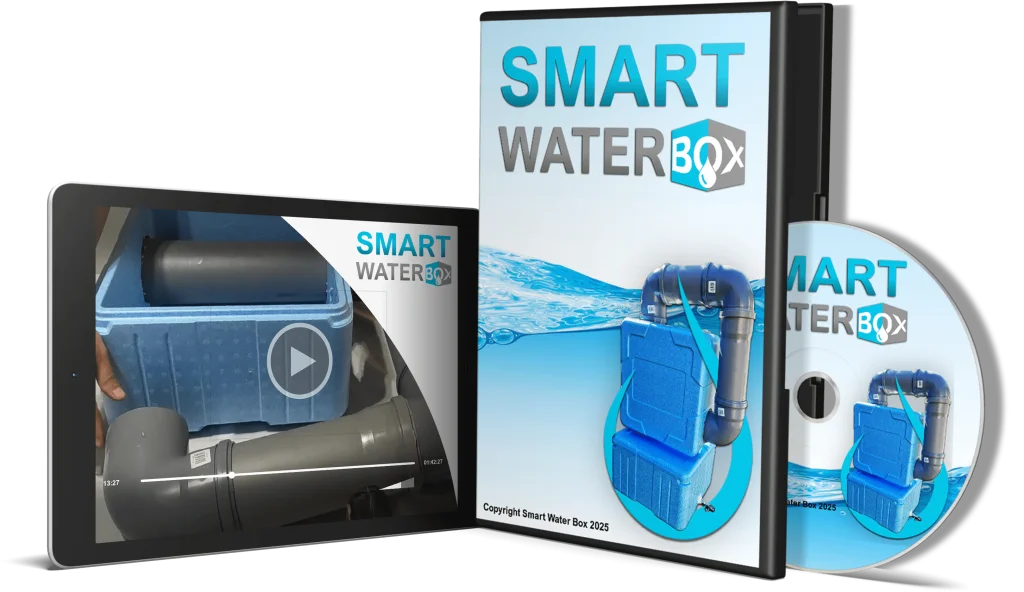
A complete troubleshooting and maintenance guide for keeping your Smart Water Box running at peak performance. Covers filter replacement schedules, common issues, seasonal adjustments, and long-term care.
An extensive guide covering practical home improvement and self-sufficiency projects that complement your water independence journey — from basic plumbing maintenance to home water storage best practices.
A detailed blueprint for building a DIY solar heater to power and supplement your Smart Water Box system — making your off-grid water setup truly independent from the electricity grid.
The Smart Water Box is not a gimmick — it’s a DIY application of well-established atmospheric physics, thermodynamics and water purification science that governments, NGOs and commercial manufacturers have used for decades.
Atmospheric Water Generation is an established technology used commercially and in humanitarian contexts globally. The U.S. Department of Energy has explored AWG as a viable source of potable water for remote communities. FEMA and military logistics organizations use commercial AWG units in disaster relief and remote field operations. The technology is peer-reviewed, internationally documented, and increasingly studied as a response to global water scarcity.
The core principle — that cooling air below its dew point causes water vapor to condense into liquid water — is fundamental thermodynamics. It’s the same physics behind air conditioners, dehumidifiers, and natural phenomena like morning dew and fog. These processes have been mathematically understood since the 19th century and are applied in every modern HVAC system. The Smart Water Box blueprint harnesses this process deliberately, optimizing the condensation surface, airflow, and collection geometry for maximum water yield.
Even relatively pure condensed water benefits from filtration before drinking. The Smart Water Box’s multi-stage filtration system uses activated carbon and UV sterilization — two of the most rigorously studied and widely applied water treatment technologies. Activated carbon filtration is endorsed by the U.S. EPA for removing a wide range of organic and chemical contaminants. UV sterilization is endorsed by the WHO as a primary disinfection method for drinking water.
Commercial AWG machines range from $2,000 for small household models to $15,000+ for larger capacity units. The Smart Water Box blueprint achieves comparable output through efficient component selection and optimized design, for a fraction of the cost. The National Institute of Standards and Technology (NIST) has documented DIY approaches to thermodynamic water recovery systems in engineering literature. Smart Water Box takes this research and translates it into a practical build any homeowner can follow.
The Smart Water Box delivers benefits across three dimensions: immediate utility (clean water from day one), long-term savings (no ongoing water bills), and resilience (independence from infrastructure that can fail).
The most fundamental benefit: clean, safe, mineral-enriched drinking water generated from the air around you. Unlike tap water (which may contain chlorine, fluoride, heavy metals from aging pipes, and pharmaceutical residues) or bottled water (which carries microplastic contamination concerns documented by the WHO), Smart Water Box water goes through controlled multi-stage purification from source to glass. You see exactly what’s in your water because you built the system yourself.
No plumbing. No municipal connection. No well. No groundwater dependency. The Smart Water Box requires only air and power (electricity or solar) to operate. For families in rural or remote areas where water access is unreliable, or for anyone concerned about grid dependency, this represents genuine self-sufficiency. Combined with the included solar heater bonus blueprint, you can power the entire system from the sun — making your water supply completely independent of any external utility.
The average American family spends over $1,200 per year on bottled water alone, according to data from the U.S. EPA’s household water consumption research. For families using premium filtration systems, ongoing costs include filter replacements, salt (for water softeners), and service contracts. The Smart Water Box eliminates all of these. After the initial $39.69 blueprint + ~$110 in parts, your primary ongoing costs are minimal electricity (or zero if solar-powered) and periodic filter replacements costing a few dollars per year.
Access to clean water during emergencies is critical. Natural disasters, infrastructure failures, drought, and contamination events can cut off access to safe water for days or weeks. FEMA recommends storing at least one gallon of water per person per day — but storage has limits. The Smart Water Box keeps producing water from the air, as long as there’s power. For families in hurricane zones, earthquake-prone areas, or regions prone to drought, this is a genuine survival asset.
The environmental case for atmospheric water generation is compelling. The system eliminates plastic bottle waste (the average American uses 156 plastic water bottles per year). It reduces strain on groundwater aquifers, which the USGS documents as under significant stress in many U.S. regions. And when solar-powered, the Smart Water Box operates with near-zero carbon footprint — a meaningful contribution to personal sustainability goals.
The Smart Water Box’s purification sequence — pre-filtration, activated carbon, UV sterilization, optional mineralization — is not a single-point system. Multi-stage filtration provides redundant protection, so that even if one stage is operating below optimal capacity, the subsequent stages provide additional safety layers. This defense-in-depth approach is the same model used in municipal water treatment plants and commercial bottled water facilities.
The Smart Water Box blueprint is designed with modularity in mind. The standard build is sized for a single household’s daily drinking water needs. But the blueprint also includes scaling guidance — how to add additional condensation modules to increase daily output, how to connect multiple units in parallel, and how to configure the system for larger families, small farms, or community use cases. You start with what you need and expand as you grow.
Unlike permanent plumbing installations, the Smart Water Box is portable. Move it from room to room, take it to a cabin, install it in an RV, or set it up in a workshop or greenhouse. This flexibility makes it useful across dozens of different applications — from urban apartments wanting to reduce bottled water use, to off-grid homesteads, to emergency response teams that need deployable water solutions.
The Smart Water Box is backed by a full 60-day satisfaction guarantee. Download the blueprint, source your parts, build the system, test it in your own home, and drink from it. If for any reason you’re not completely satisfied within 60 days — whether it doesn’t meet your expectations or you simply change your mind — just reach out to our support team for a complete refund. No questions asked. No fine print. No hassle.
Your satisfaction is our promise. Your water independence is our mission.
See full refund terms in our Terms & Conditions.
Get Instant Access — Risk FreeThe Smart Water Box was designed for a wide range of water-conscious adults — from off-grid homesteaders to urban families who simply want better, cheaper water.
If you’re concerned about the quality of your municipal tap water — or tired of paying for bottled water — the Smart Water Box gives you a better option. You control the entire purification process, from air intake to glass. No unknown treatment history. No chemical additives beyond what you add yourself.
The Smart Water Box is purpose-built for off-grid living. Whether you’re building a homestead, living in a remote cabin, or pursuing a genuinely self-sufficient lifestyle, water independence is foundational. The system produces clean water from air with zero dependence on external infrastructure.
Families in hurricane zones, earthquake areas, or regions prone to drought benefit enormously from an atmospheric water source. The Smart Water Box keeps producing water from the air when taps go dry and stores go empty. It’s one of the most practical emergency preparedness tools available.
If you enjoy hands-on projects and want to build something genuinely useful, the Smart Water Box is a deeply satisfying build. The blueprint is detailed, the science is real, and the end result is a working system you built with your own hands that produces something your family can drink every day.
Reduce plastic bottle waste permanently. Stop straining local groundwater aquifers. Power your water system from the sun. The Smart Water Box gives environmentally minded families a practical, affordable path to meaningful reduction of their water-related environmental footprint.
The Smart Water Box is portable and compact. RV owners, cabin dwellers, boat owners, and remote workers can deploy it anywhere they have power — eliminating the need to haul in water or depend on questionable local sources.
The complete process from ordering to drinking fresh water typically takes one weekend. The blueprint is designed so that anyone — even with zero prior DIY or electrical experience — can follow it successfully.
The moment your order is complete, your complete Smart Water Box package — the main blueprint, three bonus guides, and all supplementary materials — is delivered to your email. Download to your computer or print the blueprints for bench-side reference. No shipping. No waiting. Everything is available within minutes of purchase.
Before purchasing any parts, spend 30–45 minutes reading through the complete blueprint. This gives you a mental map of the build before you start. The included parts list specifies exact components with size/gauge/capacity specs, sourcing notes (which parts to buy at Home Depot, Lowe’s, Amazon, or a local electronics supplier), and cost estimates. Total parts typically cost under $110.
Use the parts checklist to gather all components. Most materials are available at any major hardware store — the condensation coil, fan assembly, housing materials, filtration media, UV-C lamp, reservoir tank, and basic electrical components. The blueprint notes where specific specifications matter (for example, UV-C lamp wavelength for effective sterilization) and where you have flexibility to substitute based on local availability.
Find a flat, clean surface with good lighting. Lay out all parts and verify against the checklist before starting. The blueprint recommends gathering all tools first — basic hand tools: screwdrivers, wire cutters, drill, pipe cutter. No specialized equipment required. Clean the work surface and have a small container ready for hardware (screws, connectors, etc.).
Follow the illustrated step-by-step instructions to assemble the condensation array, air intake and fan housing, filtration cartridges, UV sterilization chamber, and water reservoir. The blueprint breaks the build into 12 numbered stages, each with a photo and written explanation. Most complete beginners finish the full build in 4–8 hours. Experienced DIYers often finish in 2–3 hours.
Connect the system to a power source as shown in the wiring diagram. Run the system for the first time according to the test procedure in the blueprint. Check all connections, confirm the fan is drawing air correctly, verify condensation is occurring on the heat exchanger surfaces, and confirm water is flowing through the filtration stages properly. The blueprint includes a pre-use flush procedure to prime the filtration media.
The blueprint recommends testing your initial water output with a basic home water test kit (available at hardware stores for ~$15) before consuming. Test for pH, TDS (total dissolved solids), and coliform bacteria. The Smart Water Box’s multi-stage filtration should produce water that passes these basic tests easily. The blueprint specifies what acceptable readings look like and what to check if anything is outside range.
Install your Smart Water Box in a well-ventilated location with consistent humidity — a kitchen, utility room, basement, or garage all work well. Monitor the reservoir level, check filter condition monthly, and replace UV-C lamp annually per the maintenance schedule. The Fix-It bonus guide covers the complete maintenance schedule, common troubleshooting scenarios, and seasonal optimization tips to maximize year-round water production.
Safety note: Always test water before drinking. The blueprint includes a testing protocol. Never skip the pre-use flush. If you notice any unusual taste or odor in the water after the system has been running, check filters first and consult the Fix-It guide. See our full disclaimer for water safety guidelines.
The Smart Water Box was developed by a dedicated team of engineers, environmental scientists, and sustainability specialists who share a common mission: making clean, reliable water accessible to any household regardless of their location, infrastructure, or economic situation.
The team was assembled in response to a global problem that has been growing steadily worse. According to the World Health Organization, 2 billion people worldwide lack access to safely managed drinking water services. In the United States alone, the EPA has documented thousands of public water systems with violations of federal safety standards. The team wanted a solution accessible to ordinary people — not a $15,000 commercial AWG unit, not a complex installation requiring contractors, but a practical blueprint any motivated adult could follow.
Working at the intersection of atmospheric physics, water purification engineering, and practical DIY design, the team spent years refining the Smart Water Box blueprint through real-world builds in diverse climates — from humid coastal environments to semi-arid regions, from urban homes to rural off-grid cabins. The result is a proven design with documented performance across a wide range of real-world conditions.
The three bonus guides (Fix-It, Home DIY, and Solar Heater) were developed alongside the core blueprint to ensure buyers had everything needed to implement, maintain, and expand their water independence — not just a one-time build guide, but a long-term resource for self-sufficient living.
Once you click “Buy Now” below, you’ll be directed to our secure ClickBank checkout page. Simply fill in your details, complete your order, and gain instant access to your complete Smart Water Box blueprint and all three bonus guides — all delivered to your email within minutes.
Your security and privacy are our top priority. All transactions are processed through ClickBank, one of the world’s most established online payment processors with over two decades of secure transaction experience. Their PCI-DSS compliant payment infrastructure uses enterprise-grade SSL encryption to protect your payment details. When you purchase the Smart Water Box, you can be completely confident that your personal and financial information is secure.
If you are not completely satisfied with the Smart Water Box within 60 days of receiving it, you can request a full refund by emailing our support team. We will promptly refund your entire purchase amount without any questions asked.
Support Email: support@smart-water-box.co
Backed by our 60-day satisfaction guarantee · Secure checkout via ClickBank · Instant digital delivery